Introduction — Two Opposite Extremes, No In-Between
Japan has some of the most advanced toilets in the world, and also some of the most old-fashioned — often in the same building. Knowing what you’re looking at (and which buttons do what) saves a genuinely awkward moment.
Squat Toilets (Washiki)
Older buildings, train stations, and some public restrooms still have traditional squat toilets. Face the hood/raised end (away from the door you entered), squat, and there’s usually a small lever or button for flushing — not the pull-chain look older toilets have.
Reassurance: Most restaurants, hotels, and modern facilities have Western-style toilets. If a stall has a squat toilet, there’s almost always a Western option in the same restroom too — check other stalls first if you’d rather avoid it.
Washlet Buttons (The High-Tech Ones)
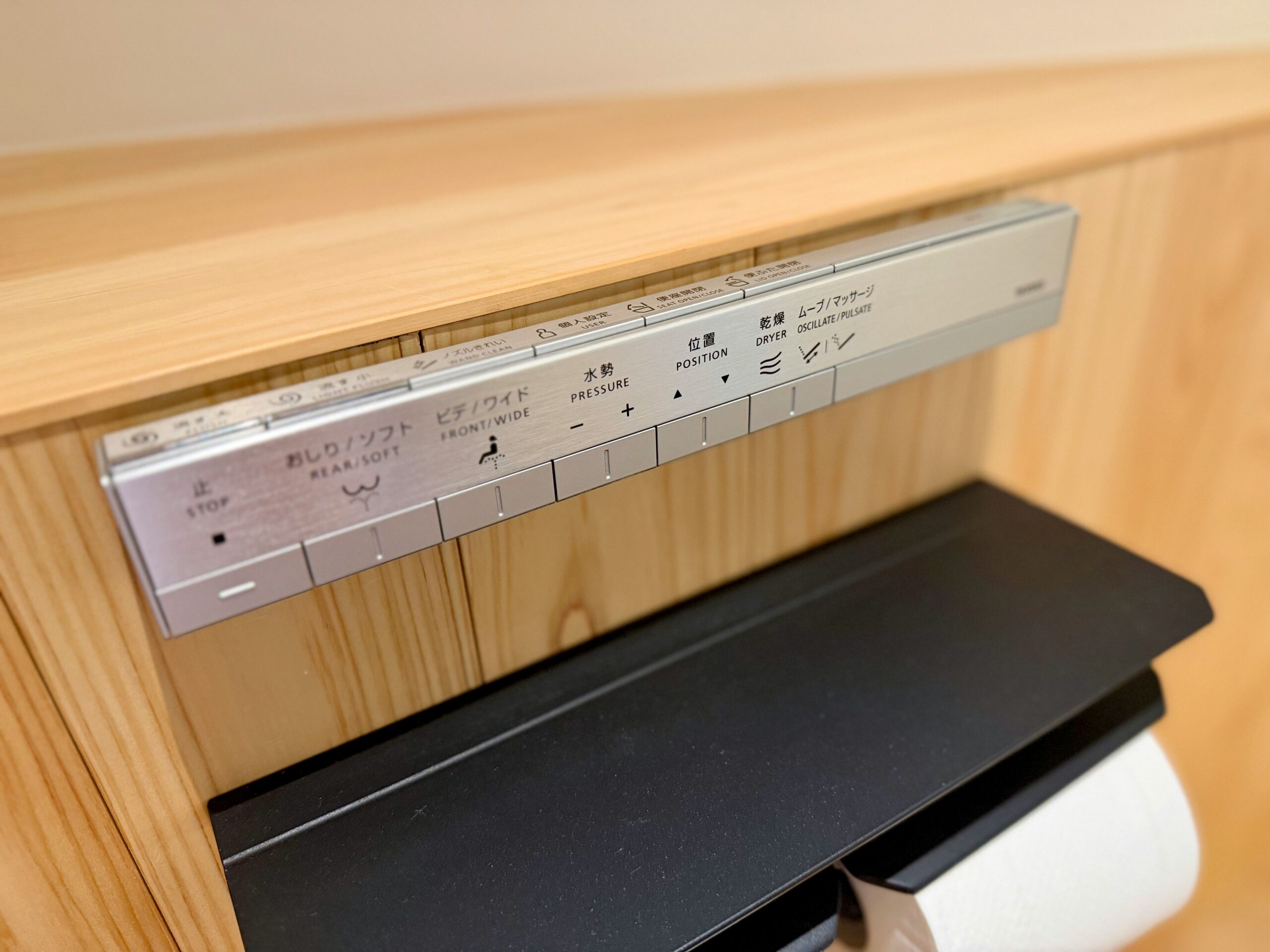
The control panel next to Western-style toilets can look intimidating, but the layout is fairly consistent:
- おしり (oshiri) — rear wash
- ビデ (bide) — bidet/front wash
- 止 (stop) — the button to know above all others; stops whatever’s happening immediately
- 乾燥 (kansō) — dryer
- 音姫 / 流水音 — a “sound” button that plays flushing noise for privacy, not an actual flush
- 強さ (tsuyosa) — pressure/strength adjustment, usually a dial or +/- buttons
The one thing to know: the flush is almost always a separate lever, button, or automatic sensor — not part of the washlet control panel. Don’t panic if you press every button and nothing flushes; look for a separate handle or sensor.
What About Public Restrooms Without Any of This?
Basic public restrooms (parks, older stations) may have neither feature — just a standard toilet with a simple flush handle or button. Carrying a small pack of tissues is worth it, since some public restrooms don’t stock paper towels or hand dryers, and occasionally not toilet paper either at older facilities.
The Bottom Line
Squat toilets are increasingly rare and always have a Western alternative nearby. Washlet panels look complicated but boil down to two buttons worth remembering: the wash button you want, and 止 (stop) for when you’re done experimenting.


コメント